Source-critical employees are increasingly important in the age of AI
In a digital world where deepfakes and AI-generated images are becoming more convincing, fake profiles can be created in minutes and algorithms reward emotional posts, our immediate reactions are often the ones that are exploited. This can become a risk if we fail to stay critical of the information we take in. When there are no filters protecting us, we must sometimes act as a filter ourselves.
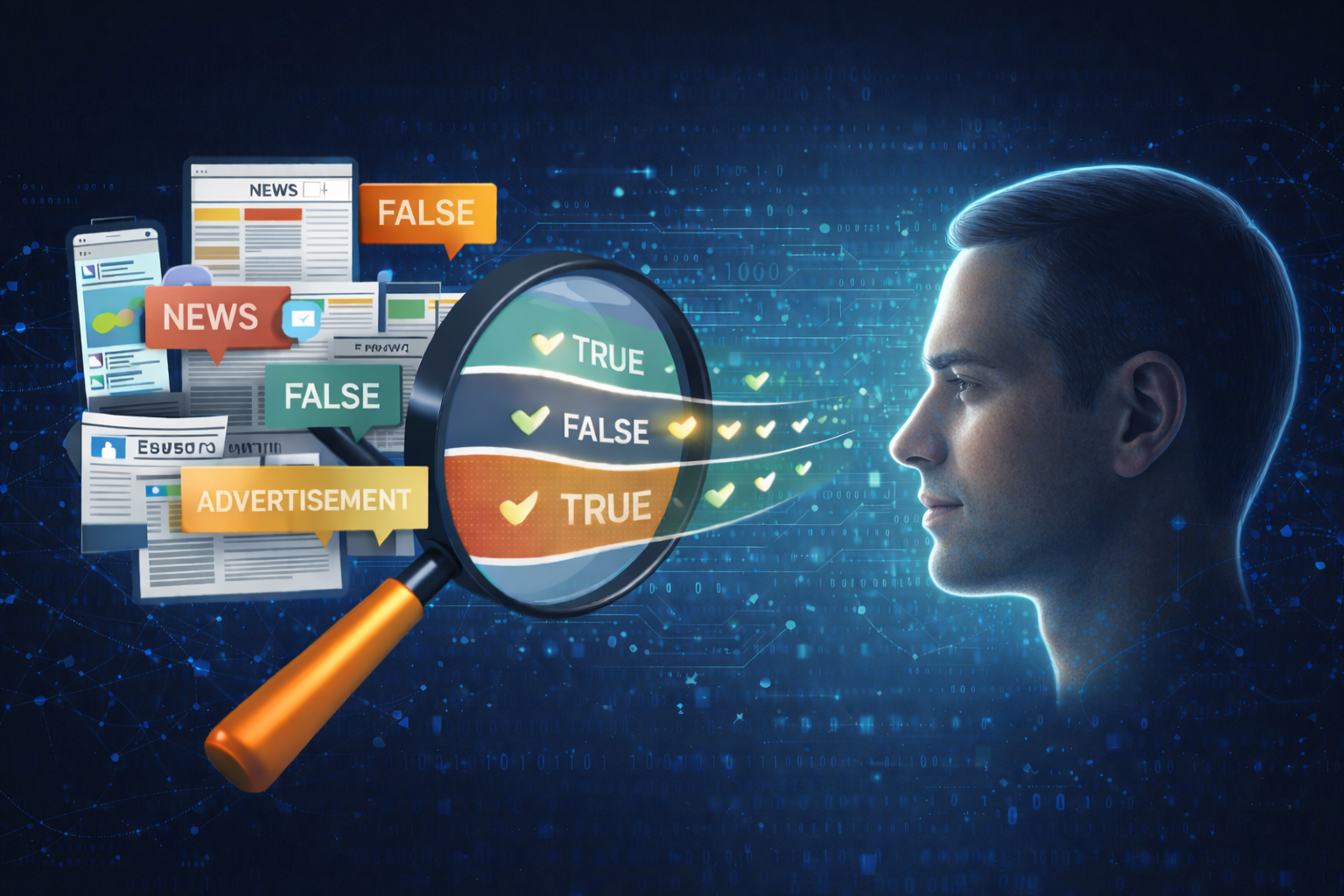


Source criticism has long been seen as an academic exercise. Something we learned at school, used when writing essays, and perhaps complained about when we had to cite sources correctly. But today, source criticism is not just schoolwork. In many ways, it has become a survival skill – for individuals, organisations and society as a whole.
As a producer of information security training, we see proof of this every day at Junglemap: the most advanced technical security systems in the world can fail if a person clicks the wrong link, trusts the wrong sender or reacts too quickly to an urgent message. In the end, much of security work comes down to exactly that – source criticism.
And here is an important insight for employers: it benefits everyone when employees are source-critical, not only at work but also in their everyday lives.
Because if we are honest, the line between private life and working life is not always as clear as it should be. Many people use the same phone for banking apps, social media and work email. We might browse privately on our work computer during lunch. Some people, even though they know they shouldn’t, use their work email to sign up for services. Password resets, delivery notifications and calendar invitations all arrive on the same device.
One click in private life can easily become an incident at work.
If we are unlucky, it does not stop at a private mistake. We might have used our work email to log in somewhere, reused passwords, or installed work apps on the same phone. Clicking on a fraudulent message could then mean that work-related information leaks, that an attacker gathers details to map us and the company for a targeted attack – or in the worst case gains a direct way into the organisation’s systems. Even if the message first arrived in a private inbox.
That is why source criticism in everyday life is becoming increasingly important for organisations as well. Someone who questions a sensational post in their private feed is hopefully also more likely to react sensibly to an unexpected email from “the CEO”. Someone who thinks about the purpose behind a dramatic headline is also better prepared to recognise a phishing attempt.
Source criticism is not just a skill. It is a way of thinking.
Source Criticism Day
So why all this talk about source criticism? March 13th marks Source Criticism Day in Sweden. Although the initiative is aimed at the general public, it is also something employers can benefit from highlighting. Today, the classic pillars of source criticism perhaps are no longer enough:
- authenticity (is the source really what it claims to be?)
- proximity (how close in time is the source to the event it describes?)
- bias (does the author have any hidden motives?)
- dependence (is this a first-hand source, or does it rely on another source?)
These questions are still relevant – but the landscape has changed.
Today we also need to ask:
- Is the content manipulated or AI-generated?
- Who benefits if I react strongly to this?
- Is the message meant to inform me, or to trigger a reaction?
- Is it real material that has been placed in the wrong context?
In today’s attention economy, the most dangerous thing is not always a lie. It can be something that is true but taken out of context. It can be real material used in a misleading way. And above all, it can be emotional content – the kind that makes us react before we have time to think.
That is why Junglemap summarises much of our security work through the STAR model:
Stop. Think. Ask. React.
- Stop – pause.
- Think – what am I actually seeing or reading?
- Ask – can I check this with another source or colleague?
- React – only then do I take action.
This applies just as much to a private text message as to an invoice in your inbox. For employers, it is not only about avoiding incidents. It is about building a culture where employees feel comfortable asking questions, double-checking and asking for a second opinion. A culture where it is perfectly acceptable to say: “This seems a bit strange, can you confirm it?”
Source criticism is not about distrust. It is about being aware of risks. In the age of AI, technology is moving faster than ever. But our greatest strength is still the same: the ability to pause and think.
When there are no other safeguards, we sometimes have to be the filter ourselves.